Kashida Embroidery: The Complete Guide to Kashmir's Timeless Craft
Kashidha Designs
July 06, 2026
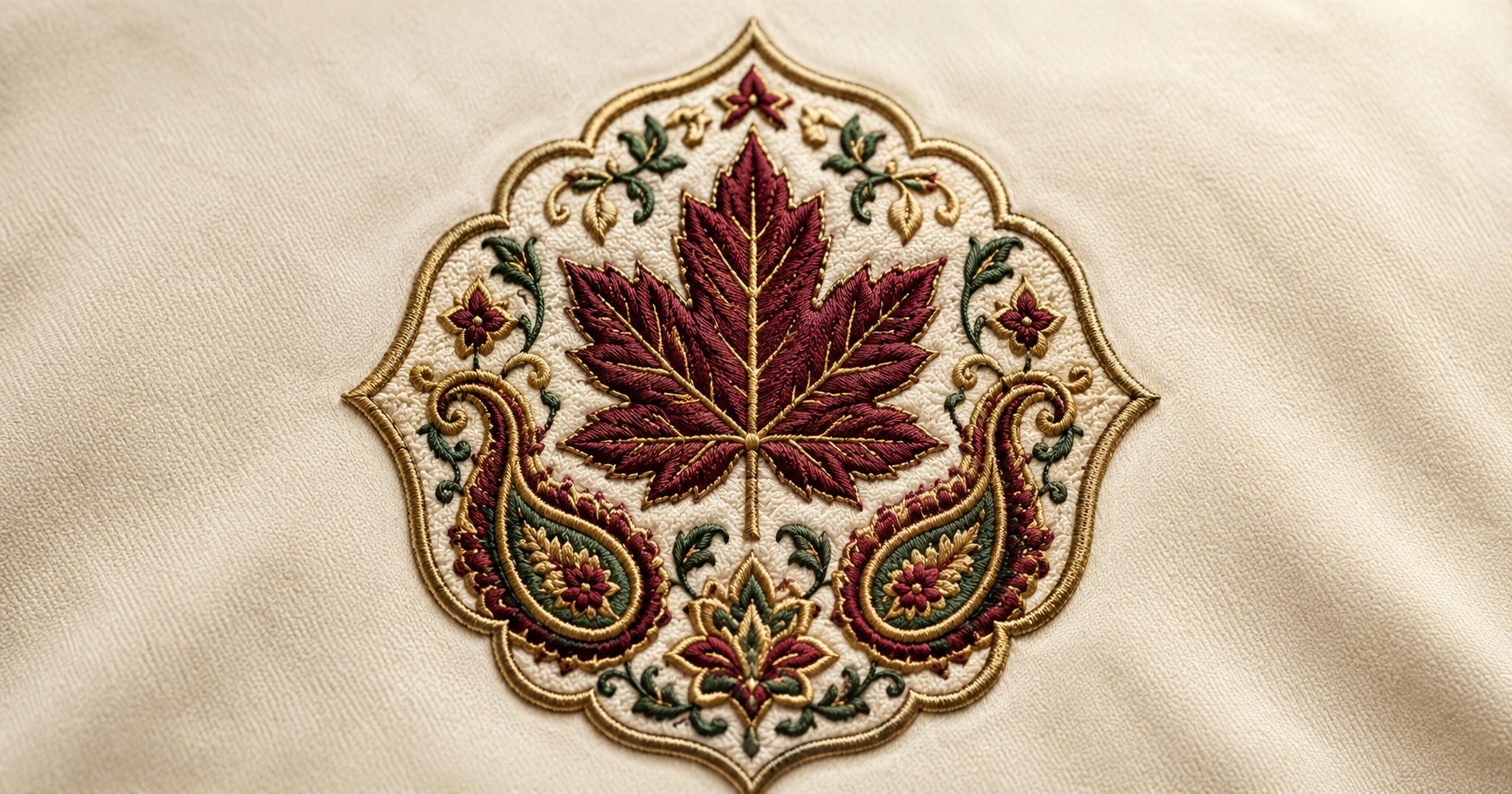
Ask anyone in India to name a legendary embroidery, and kashida will be among the first. Often called the pride of Kashmir, kashida embroidery turns shawls, pherans and home textiles into gardens of thread: chinar leaves, blossoms, birds and paisleys flowing across fabric in rich, unbroken colour. In this guide we explore where kashida comes from, what makes it special, the stitches and motifs that define it, and how its spirit lives on in modern custom embroidery.
What Does "Kashida" Mean?
The word kashida traces back to the Persian kashidan, meaning "to draw" or "to pull". It is a fitting description of what embroidery actually is: drawing with a needle and thread. In Kashmir the craft is known as kashidakari, and in Urdu and Persian that word simply means embroidery, or needle work. Over centuries the term became shorthand for the valley's distinctive style of embroidery as a whole.
A small note for the curious: in Arabic calligraphy, "kashida" also refers to the elegant elongation of letters. Same word, different art. This guide is about the needle craft.
Where Is Kashida Embroidery From? A Short History
Kashida embroidery belongs to the Kashmir valley, where it has been practised for centuries. Craft historians trace its flowering to Persian influences that travelled to Kashmir with artisans and sufi saints, and it reached remarkable refinement under royal patronage in the Mughal era, when Kashmiri shawls became prized possessions across India and far beyond.
Historically, much of Kashmir’s commercial shawl embroidery was carried out by skilled male artisans, while women kept embroidery traditions alive in homes and regional crafts. The skill passed from generation to generation, often worked through the long winter months. A single richly embroidered shawl could take months, sometimes years, to complete.
Kashida Through the Centuries
| Period | What happened |
|---|---|
| Early Kashmir | Decorative needlework traditions take root in the valley (exact origins are debated) |
| Persian influence | Floral motifs and refined aesthetics arrive with travelling artisans |
| Mughal era | Royal patronage carries Kashmiri shawls across the subcontinent |
| 19th century | Kashmiri shawl embroidery becomes prized across Europe |
| Today | Hand kashida continues in the valley, while modern custom embroidery carries thread-craft into everyday wardrobes |
What Is Kashida Famous For?
Three things set kashida apart:
- Nature at the heart of every design. Kashida embroidery patterns and motifs draw overwhelmingly from the Kashmiri landscape: chinar leaves, lotus blossoms, almonds, cypress trees, parrots, kingfishers and the ever-present paisley (butta).
- Colour that glows. Artisans build entire scenes from vividly coloured threads; in the richest pieces the stitching grows so dense that the cloth itself seems woven from flowers.
- Economy of stitches. Classic kashida achieves its richness with surprisingly few stitch types; many traditional pieces rely predominantly on one stitch family. The mastery lies in placement, density and colour, not complexity.
The Signature Stitches of Kashida
Traditional kashida is built on a small, disciplined vocabulary of stitches:
- Chain stitch (zalakdo) — the workhorse of Kashmiri embroidery, worked in fine loops that fill motifs with flowing colour.
- Buttonhole stitch (vatachik) — used for bold outlines and dense petal edges.
- Darning and stem stitches — for backgrounds, veins and delicate line work.
- Satin stitch — used in many pieces for smooth, glossy fills on leaves and petals.
- Tilla / talibar work — precious metallic-thread embellishment reserved for special occasion pieces.
Types of Kashida Work
Among the best-known forms of Kashmiri needlework associated with kashidakari are:
- Sozni — extraordinarily fine needlework on pashmina and fine wool, famous for shawls whose two sides can even carry different colours.
- Aari (hook) work — chain-stitch embroidery worked with a hooked needle, covering large areas with remarkable speed and flow.
- Papier-mâché style — motifs stitched in bright, glossy threads and outlined in black, echoing Kashmir's painted papier-mâché art.
- Namda work — cheerful woollen chain-stitch embroidery on felted rugs.
Kashida vs Other Great Indian Embroideries
India's embroidery map is wonderfully crowded. Here is where kashida sits among its famous cousins:
- Kashida (Kashmir) — nature motifs in rich colour, chain and satin stitches on wool and fine cloth.
- Chikankari (Lucknow) — delicate white-on-white shadow work on airy fabrics.
- Phulkari (Punjab) — bold geometric flower work flooding the cloth with silk floss.
- Kantha (Bengal) — running-stitch storytelling on layered soft cotton.
- Zardozi (Delhi/Agra) — regal raised metalwork with gold and silver threads.
Each is a world of its own, and each proves the same point: in India, thread has always been a language.
The Kashida Behind "Kashidha"
If our name sounds familiar now, that is no accident. When we were choosing a name for our studio, we kept coming back to this one word. Say "kashida" almost anywhere in India and people immediately picture thread on fabric: needle work, patience, something made with care. In Urdu and Persian, kashidakari literally means embroidery. No other word said what we do so plainly and so beautifully. So we became Kashidha Designs, our own spelling of a word that already lived in everyone's memory.
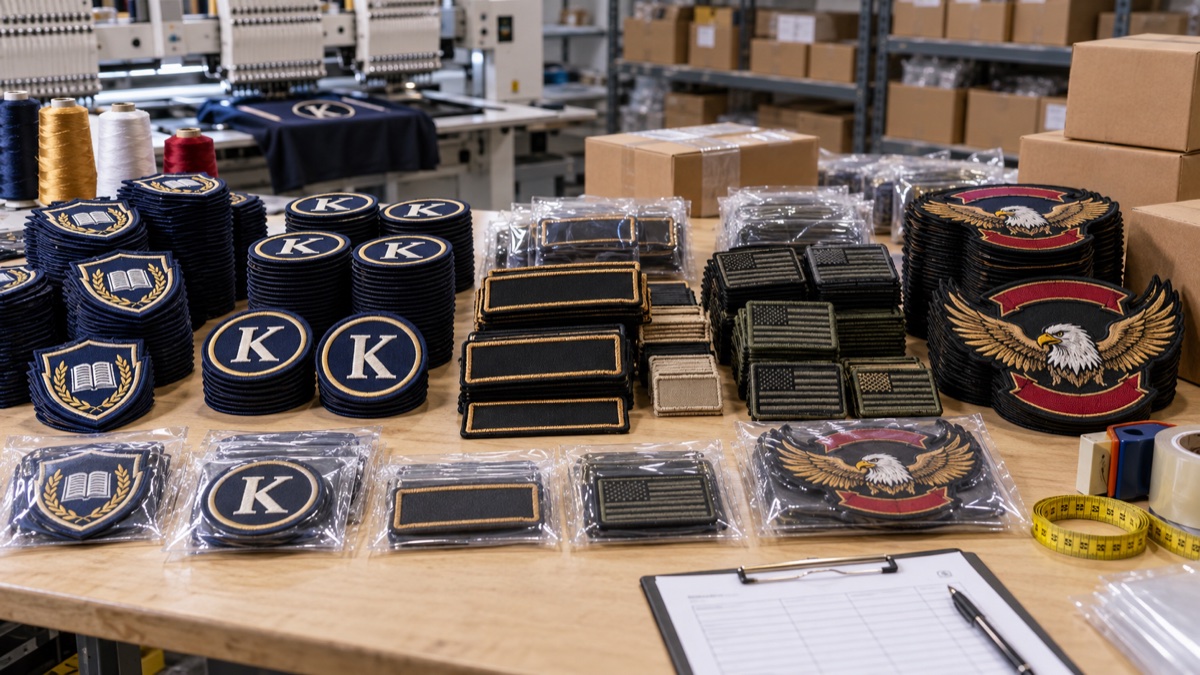
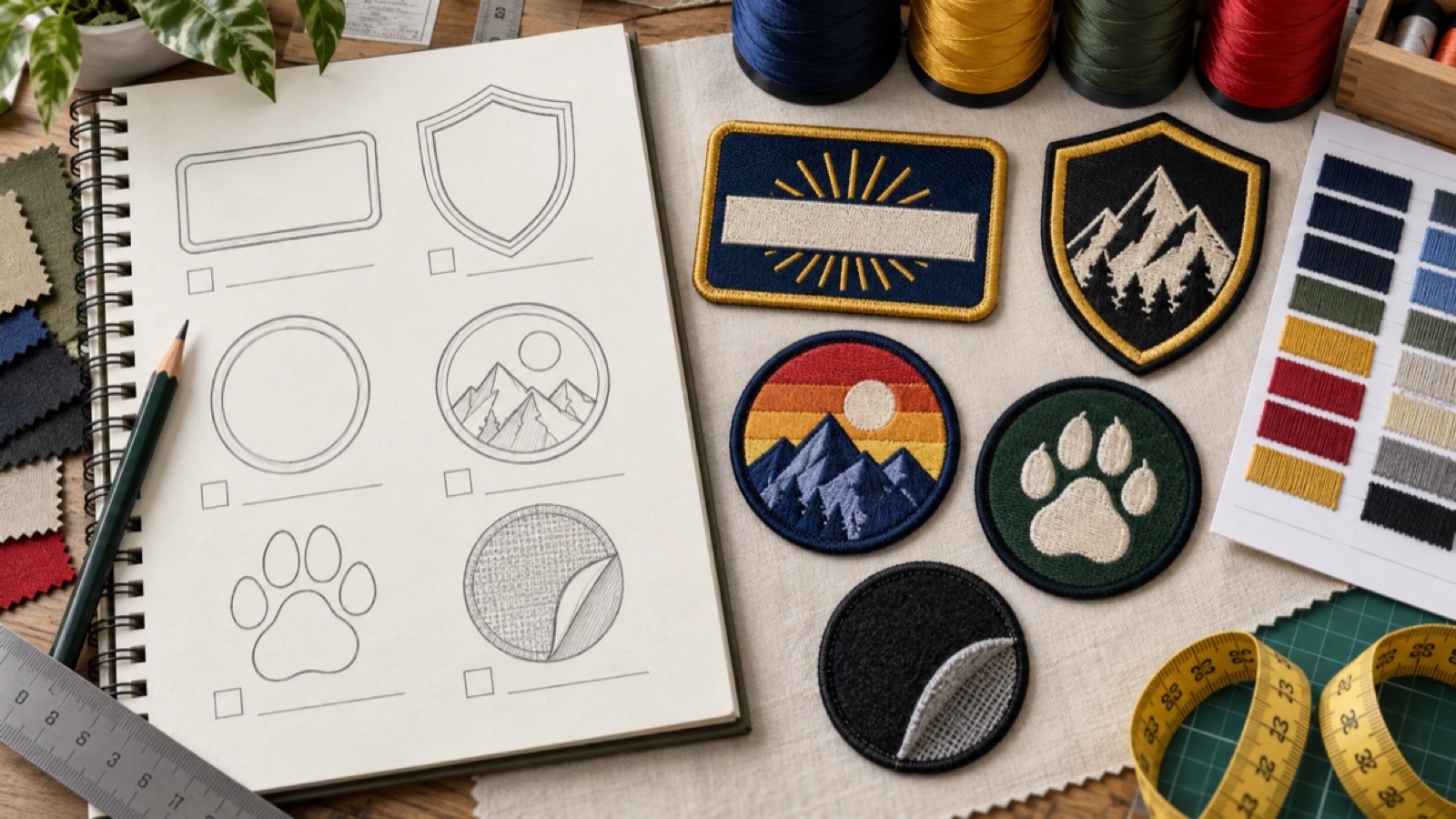
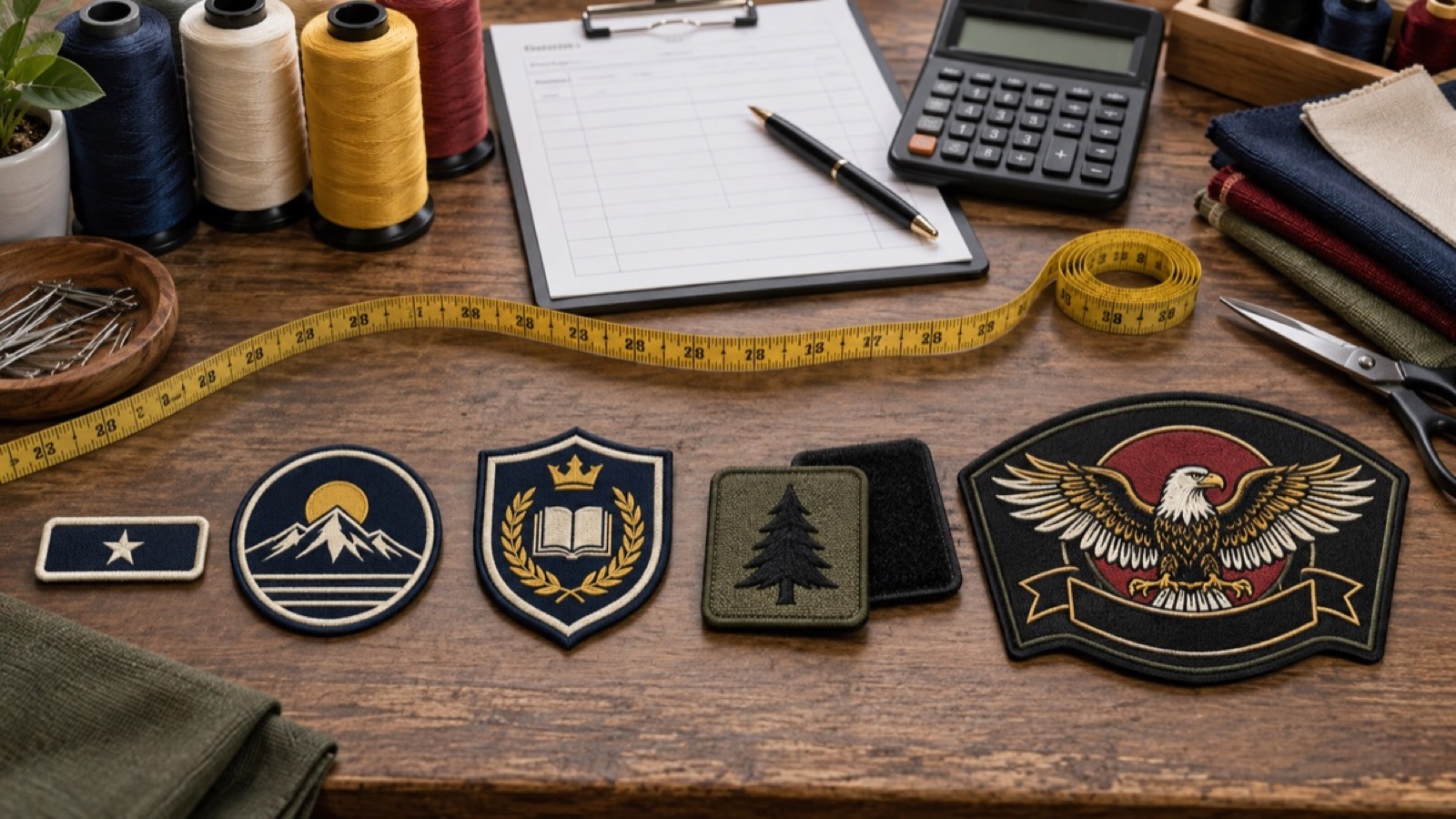
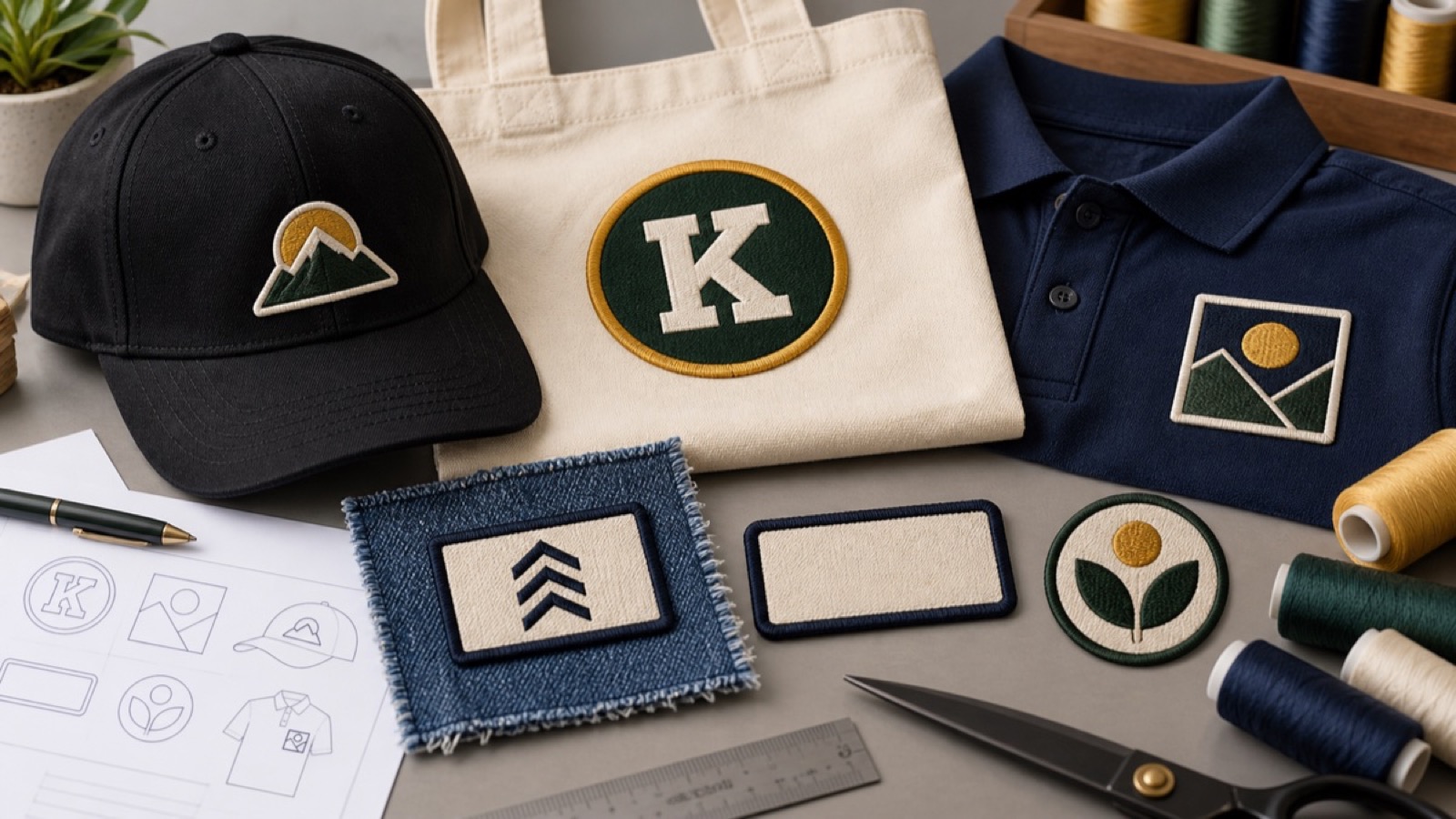
We should be clear about what we are and what we are not: we are not traditional Kashmiri artisans, and authentic hand-stitched kashida from the valley deserves to be sought out and celebrated in its own right. Traditional kashida is worked entirely by hand, one needle at a time, and that is part of what makes an authentic piece so precious. Our pieces are different: made-to-order custom embroidery, crafted with consistent stitch quality and everyday durability — and we never market our work as authentic Kashmiri hand embroidery. What we carry forward is the spirit of the craft — precision, colour, durability and pride in thread — applied to modern custom embroidery: custom patches and badges, embroidered polo and oversized T-Shirts, caps, monograms and wall art, made to order and delivered across India.
Curious how stitched branding compares to printing? We wrote an honest comparison: Logo Embroidery vs Printing — which is right for your brand?
Caring for Embroidered Pieces
Whether it is an heirloom kashida shawl or a freshly stitched polo, embroidery rewards gentle care: wash cool and inside-out, skip harsh detergents, and iron on the reverse. We keep a full routine in our guide to caring for embroidered apparel so it lasts for years.
Frequently Asked Questions
Where is kashida embroidery from?
Kashida embroidery comes from the Kashmir valley in northern India, where it has been practised for centuries and refined under Persian and Mughal influence.
What is kashida famous for?
Kashida is famous for nature-inspired motifs such as chinar leaves, paisleys, blossoms and birds, worked in rich, colourful thread, most iconically on Kashmiri shawls and pherans.
What does kashida mean?
The word derives from the Persian kashidan, "to draw or pull". In Urdu and Persian, kashidakari means embroidery, literally "needle work".
What are the types of kashida?
Major styles include fine sozni needlework, aari (hook) chain-stitch work, papier-mâché style embroidery and namda rug work, with tilla or metallic thread reserved for occasion pieces.
Is kashida embroidery done by hand?
Traditional Kashmiri kashida is stitched entirely by hand with needles or, in aari work, a hooked tool. Kashida-inspired motifs can also be recreated in modern custom embroidery for everyday apparel.
Which fabric and thread are used for kashida?
Classic kashida is worked on wool, pashmina and cotton bases using vividly coloured wool, silk or cotton threads, with metallic tilla thread reserved for occasion pieces.
Why are chinar leaves so common in kashida designs?
The chinar tree is one of Kashmir’s most beloved symbols, turning fiery red each autumn. Artisans stitched the world around them, so the leaf became a signature motif.
Are kashida and kashidakari the same thing?
Essentially yes. Kashidakari is the fuller Urdu and Persian term for needle work, and "kashida" is its everyday short form — both refer to the embroidery tradition of Kashmir.
What is the difference between kashida and sozni?
Sozni is a fine, dense style of needlework within the broader kashidakari family, famous on pashmina shawls. “Kashida” is the umbrella term for Kashmiri embroidery as a whole.
Is Kashidha Designs related to kashida embroidery?
Our name is a tribute to the craft. We do not produce traditional hand-stitched Kashmiri kashida; we create modern custom embroidery (logos, patches, apparel, caps and monograms) that carries the same love of thread, made to order across India.
Stitch Your Story
Traditional kashida preserves centuries of Kashmiri heritage, and it proves something timeless: thread outlasts trends. At Kashidha Designs, we honour that enduring love of thread with modern embroidered pieces made to tell today’s stories. If you would like that permanence in your own story — a logo stitched onto team polos, a patch for your club, a monogram made for someone you love — explore our made-to-order collection or start a custom project with us at contact@kashidha.com. Stitch your story, we make it real.
Written by
Kashidha Designs
Related Articles